
Gujhya Gyan
Śaiva Tantric Worlds
From temple liturgy and Śaiva Siddhānta to nondual currents of Bhairava and recognition.
Śaiva tantric traditions transformed religious life across much of premodern Asia. Their scriptures—often called Āgamas, Tantras or Saṃhitās depending on context—address temple construction, icon consecration, daily worship, initiation, mantra, yoga, kingship, liberation and philosophy. “Śaiva Tantra” therefore includes public institutions as well as esoteric practice.
Śaiva Siddhānta
Śaiva Siddhānta became a major ritual and theological tradition, especially influential in South India while drawing on earlier pan-Indian Sanskrit sources. It characteristically distinguishes the Lord (pati), bound souls (paśu) and bonds (pāśa). Through Śiva's grace, initiation, disciplined practice and knowledge, bondage is overcome. Temple liturgy and priestly transmission are central to its historical life.
Bhairava, Mantramārga and nondual currents
Other Śaiva sources center Bhairava, fierce and expansive forms of Śiva, yoginīs and goddess powers. Traditions later discussed through labels such as Trika, Krama and Kaula developed powerful ritual and contemplative systems. Their texts and commentaries do not form one uniform school, and modern umbrella terms such as “Kashmir Shaivism” can hide internal differences.
Thinkers including Utpaladeva and Abhinavagupta articulated traditions of recognition (pratyabhijñā): liberation is a recognition of consciousness's own universal, free nature. Abhinavagupta's vast Tantrāloka synthesized and interpreted multiple streams rather than creating Tantra from nothing. His work is philosophically luminous but also assumes a ritual and scriptural world; extracting a few modern slogans from it misses that density.
The universe as expression
In several nondual Śaiva systems, the universe is a real manifestation of consciousness rather than a mistake external to it. Śiva's freedom (svātantrya) appears as knowing and known, subject and object, concealment and revelation. Spiritual practice is not the manufacture of divinity but the removal or transformation of constricted recognition.
This does not mean every thought is infallible or every impulse divine guidance. Limited beings misrecognize, rationalize and harm. Philosophical nonduality must be accompanied by disciplined discernment.
Temple and interiorization
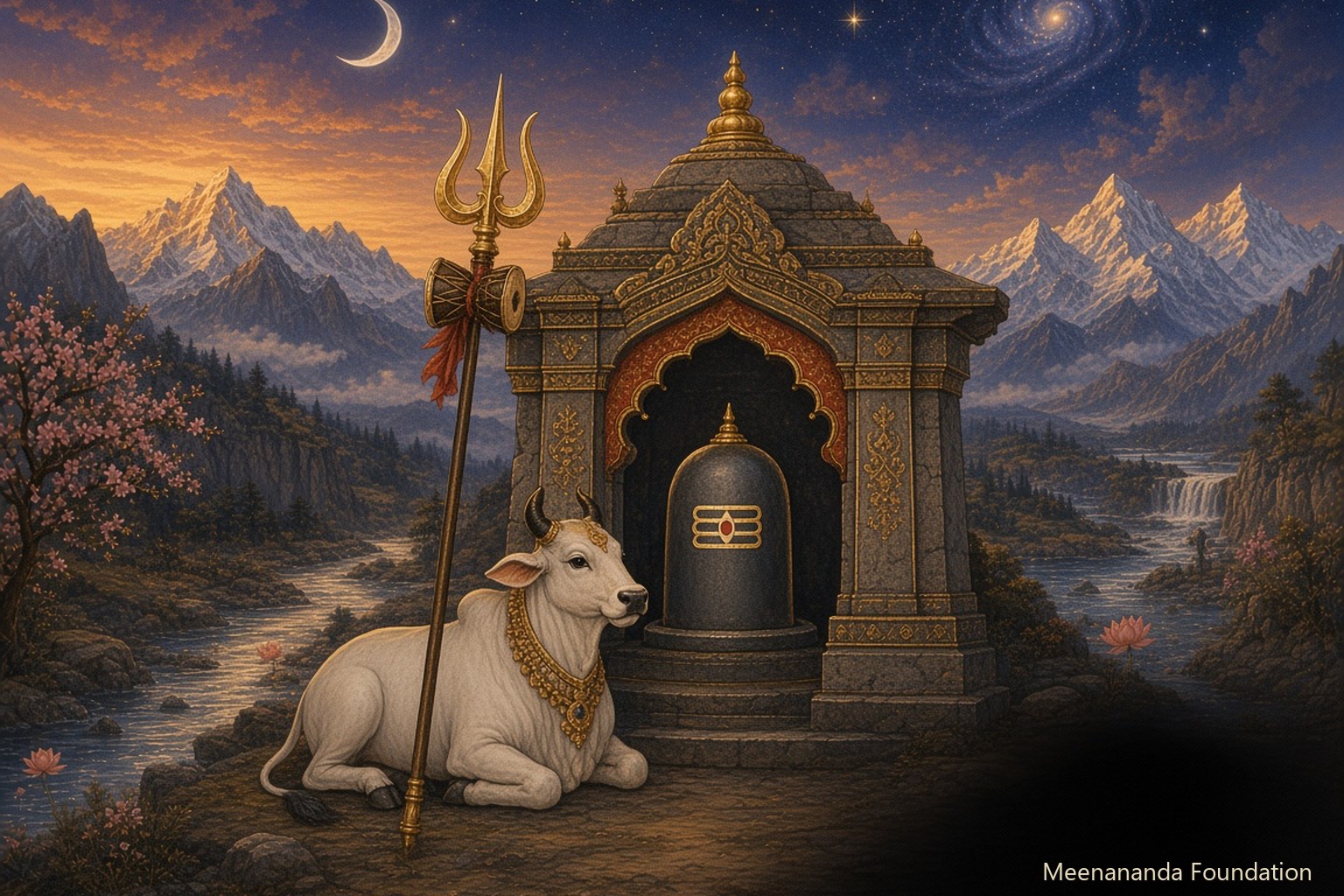
Outer ritual and inner contemplation are often related through correspondence. The body can become a temple; mantra can install divine presence; offering can be interiorized as attention. “Inner” does not automatically replace “outer.” Communities preserve architecture, gesture, materials and time because embodiment is part of the teaching.
Reading responsibly
Study labels together with primary texts, material culture and living communities. Ask whether a statement belongs to Siddhānta, a Bhairava scripture, a Krama source, later Kashmirian exegesis, or modern universalism. Precision does not weaken reverence; it allows each voice to be heard.