
Gujhya Gyan
The Śākta Vision
Divine power as Mother, presence and the very fabric of manifestation.
Śākta traditions orient worship and philosophy toward Śakti, the Goddess as power, presence, wisdom and ultimate reality. Devī is not simply a female assistant to a male god. She may be the ground from which gods, worlds, bodies, language and liberation arise.
One Goddess, many revelations
The Goddess appears as benign and fierce, royal and intimate, youthful and ancient. Durgā defeats forces that the gods cannot overcome. Kālī interrupts the illusion that time, death and ego can be domesticated. Tārā carries across danger. Tripurasundarī reveals beauty and consciousness through the subtle architecture of Śrīvidyā. The ten Mahāvidyās form one influential constellation, but they do not exhaust the divine feminine.
Different lineages organize these forms differently. Kālīkula commonly signals families centered on Kālī and related goddesses; Śrīkula commonly signals traditions oriented toward Śrī/Tripurasundarī and the Śrīcakra. These are helpful headings, not rigid boxes covering every region.
Kālī: time, truth and fearless compassion
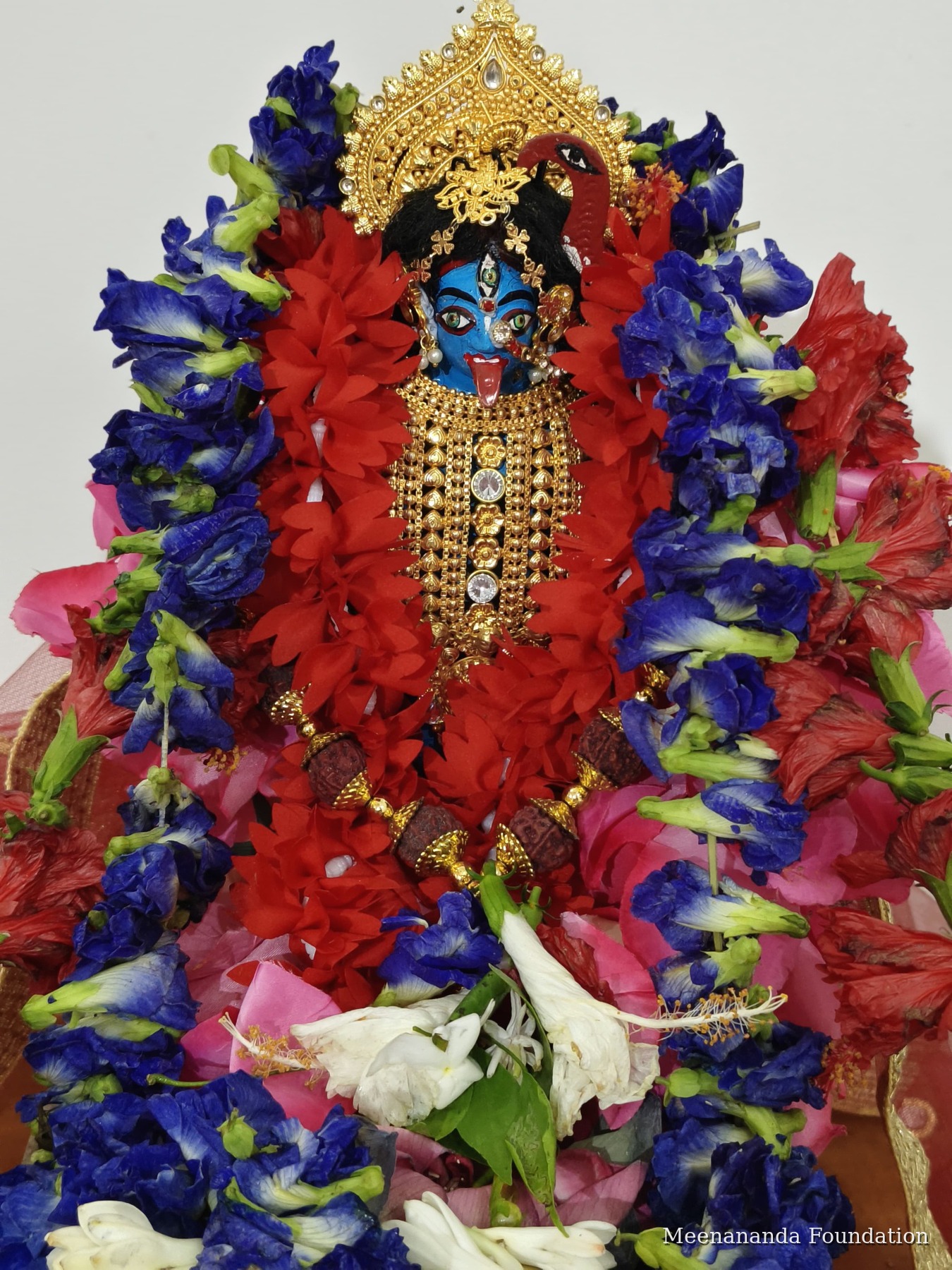
Kālī's dark or blue-black body can signify the immeasurable ground into which all colors disappear. Her garland, weapons, tongue and cremation-ground setting confront mortality and the collapse of self-deception. Yet devotees also meet her as Mother. Ferocity and tenderness are not opposites when the object of destruction is bondage, arrogance or fear.
Iconography should not be sensationalized. A skull, sword or severed head has a ritual and theological context; it is not an invitation to violence. Nor should the Mother be reduced to a psychological archetype alone. For worshippers she is living divine presence.
Śrīvidyā and sacred order
Śrīvidyā traditions approach the Goddess through refined liturgy, mantra, lineage and the Śrīcakra: an interpenetrating geometry of triangles, lotuses, circles and enclosure. The diagram is not generic décor. Its forms are embedded in specific cosmology, deity, mantra and initiation. Public appreciation should respect that a consecrated yantra and a decorative pattern are not interchangeable.
The Foundation's idol
The image accompanying this chapter is the Meenananda Foundation's own flower-adorned Kālī idol. Her blue face, red hibiscus-like abundance, gold ornament and peacock motif gather several languages of devotion: color, fragrance, gaze, offering and presence. The photograph should be captioned as the Foundation's idol, not as evidence for a universal iconographic rule.
Power and responsibility
The word śakti can inspire claims of personal power. The Śākta vision is deeper: power belongs to relationship and responsibility. If every being participates in divine power, exploitation is sacrilege. A teacher who demands secrecy to evade consent or accountability does not become holy by using tantric vocabulary.
Devotional note: Public contemplation, prayer and respectful viewing are different from initiated worship. Do not reproduce mantras or ritual sequences from unverified internet sources.