
গুহ্য জ্ঞান
Buddhist, Vaiṣṇava and Jain Tantric Currents
Shared ritual technologies do not erase distinct philosophies and religious identities.
অধ্যায়গুলি প্রথমে ইংরেজিতে প্রকাশিত। বাংলা অনুবাদ পরে আসবে।
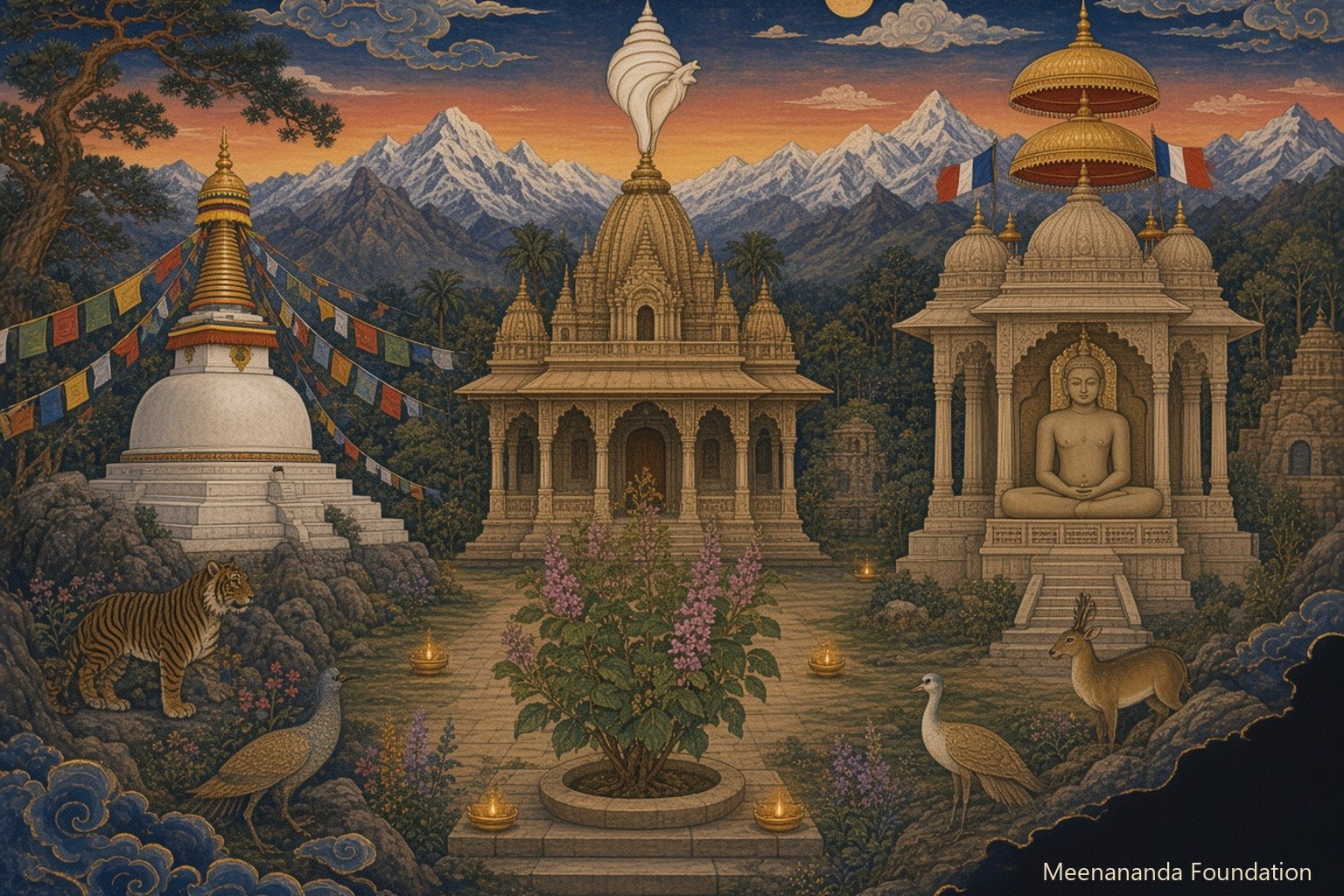
Tantra cannot be narrated as a Hindu practice that others simply borrowed. Hindu, Buddhist and Jain communities developed in sustained proximity, sharing languages, courts, pilgrimage regions, artistic forms and ritual specialists while defending distinct visions of liberation. Influence moved in more than one direction.
Buddhist tantric traditions
Buddhist tantric systems—often discussed through terms such as Mantrayāna, Vajrayāna or Esoteric Buddhism—use mantra, mandala, initiation, deity yoga and ritual transformation within Buddhist commitments. Their histories include Indian monastic universities, siddha traditions, Himalayan transmission, East Asian esoteric schools and many local developments.
The tantric deity is not best understood as a creator god imported into Buddhism. Deity yoga operates within Buddhist accounts of emptiness, compassion, awakened form and skillful means. Systems classify tantras differently, and Tibetan four-class arrangements should not be projected backward as the only map of Indian Buddhist Tantra.
Vaiṣṇava Āgamic worlds
Vaiṣṇava traditions such as Pāñcarātra developed scriptures and ritual systems for the worship of Nārāyaṇa, Vāsudeva and related forms. Temple consecration, image worship, mantra and emanational theology are important. The word “tantric” is used by scholars comparatively, while practitioners may identify primarily through Āgama, Saṃhitā, temple or sampradāya.
Shared technologies do not imply that a Śaiva mantra can be swapped for a Vaiṣṇava one. Deity, scripture, lineage and theology make ritual forms specific.
Jain tantric currents
Jain traditions also developed mantra, diagrams, protective rites and devotion to attendant deities such as yakṣas and yakṣiṇīs. These practices existed within Jain ethical and soteriological frameworks, including strong commitments concerning nonviolence. The label “Jain Tantra” is useful for study but should not suggest that all Jain communities embraced the same ritual materials.
Comparison without collapse
Comparative study works best at three levels:
- Form: mandala, mantra, initiation, visualization, fire offering or protection rite;
- Function: consecration, purification, authority, protection, merit, awakening or liberation;
- Meaning: the tradition's account of deity, self, reality, bondage and freedom.
Two traditions may share form while differing in function and meaning. Conversely, they may pursue analogous transformation through different forms.
A network, not a family tree
The image of one trunk splitting into branches is too simple. A network better represents premodern interaction: teachers travelled; courts supported multiple communities; ritual specialists debated and adapted; art crossed boundaries; texts answered rivals. This history deserves both openness to connection and respect for difference.