
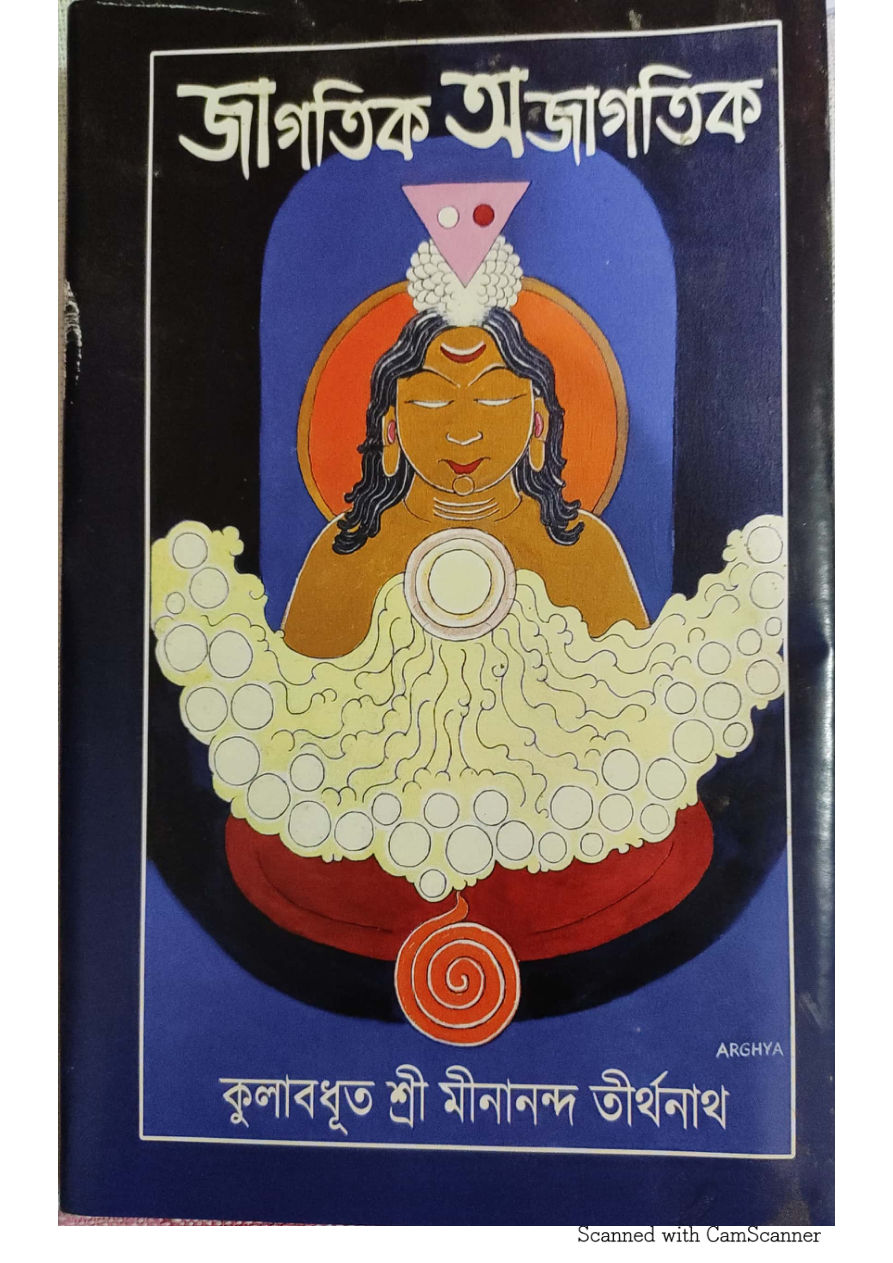
The book is Jagatik Ajagatik, Part 1. A typeset manuscript from Part 2 was published here by mistake and has been withdrawn. Scanned pages are not shown as a PDF viewer — they are hard to read. The 64 MB source PDF is not hosted.
This book is spiritual fiction. It is not a documentary of this Ashram. The original cover is unaltered. The reading is typeset from the original Part-1 pages, in printed order, for the screen. Reading-parts are editorial. Extra illustrations were made for this website; they are not plates from the printed volume. The English is a reading translation of those pages. Guruji’s own English preface is kept unaltered.
This English reading follows the original Part-1 pages. Guruji’s own English preface is kept unaltered. The novel is translated from those pages for the screen — it is not a second scanned PDF.
Dedication and submission
These lines are transcribed from the original opening pages. The novel follows as a typeset reading of the same Part-1 pages.
Dedication
To my late mother, and to my discerning, wise elder brother Yogabrata Mukherjee (presently living in America).
Submission
Mother, receive my pranam today.
The worldly eye does not search the sky,
for you are woven into my heart.
So I do not find you outside.
I wish, Mother, to see your face once.
Yet fear clings and holds the heart,
and so I cannot find your feet.
Saying Mother, Mother, I speak only within.
Whatever is mine is all your gift.
I am grateful, birth after birth.
I am fortunate that such a Mother is mine.
Receive a hundred crore pranams, Mother mine.
Pranam — Meenananda Tirthanath, Minakshi Devyomba.
Jagatik Ajagatik
Guruji’s English preface, published unaltered from the supplied preface PDF.
The story begins with a young, established Bengali doctor who has a deep interest in Tantric practices. Despite leading an ordinary and successful life, he begins to witness a series of strange and inexplicable events. A rational and scientifically minded man, he becomes both frightened and intrigued by these unusual experiences and sets out on a journey in search of answers. His quest eventually takes him to Haridwar.
There, on the banks of the Saptadhara, he comes across a Bengali Tantric practitioner said to possess extraordinary powers. During his journey, the young doctor encounters several fraudulent and self-proclaimed Tantrics. However, using his intelligence and sound judgment, he sees through their deception and rejects them. Eventually, he reaches an ashram hidden deep within the forests of Saptadhara.
On his first night at the ashram, he meets two disciples of the mysterious Tantric master. Through them, he learns more about their revered guru, an enigmatic practitioner with extraordinary spiritual abilities. Everyone knows him as Pagla Baba, a name given to him because of his peculiar mannerisms, appearance, and way of speaking. Unlike the fraudulent Tantrics who often disguise themselves in elaborate robes and outward displays of spirituality, Pagla Baba dresses simply. His true identity as a genuine practitioner can only be understood through conversation and personal interaction with him.
Fascinated by the depth of his knowledge and wisdom, the young man begins spending his days at the ashram as his disciple, following the path of Tantric practice.
During his stay, he encounters a series of inexplicable and supernatural phenomena—events that might ordinarily be attributed to ghosts or spirits. At the same time, the ashram becomes a place where he discovers a deeper appreciation for nature and an inner journey of self-realisation.
Even today, extraordinary events continue to occur that cannot easily be comprehended through the limited reasoning of ordinary people. Thus, those who remain fascinated by the supernatural continue to seek out individuals possessing extraordinary abilities, hoping to encounter someone like Pagla Baba.
The young man's name is Shashwata. Considering himself fortunate, he becomes deeply devoted to Pagla Baba and chooses to follow his path. He eventually makes the ashram his home and spends his life as a practitioner of Tantra.
On Pagla Baba's instructions, Shashwata continues to practise medicine and serve people when required, while simultaneously devoting himself to Tantric spiritual practice. Thus, he leads a life divided between the worldly responsibilities of a doctor and the spiritual path of a Tantric practitioner.
Special Attractions : -
- The presence of modernity along the journey through Haridwar, Gangotri, and Gomukh, creating a contrast between the contemporary world and the ancient spiritual landscape.
- The dual meanings embedded in Pagla Baba's words and conversations, which gradually lead the reader from the Jagatik world toward an experience of the supernatural.
- Shashwata's encounter with and liberation of a person believed to be possessed by a spirit.
- The mysterious and extraordinary appearance of another young woman(sadhika) in Shashwata's life.
- Shashwata's fellow disciple Suman witnessing a severed head inside the ashram.
- Shashwata entering the hut of a terrifying Tantric practitioner deep within the forest.
- Shashwata receiving Shakta initiation according to the Tantric tradition.
Reading-parts
-
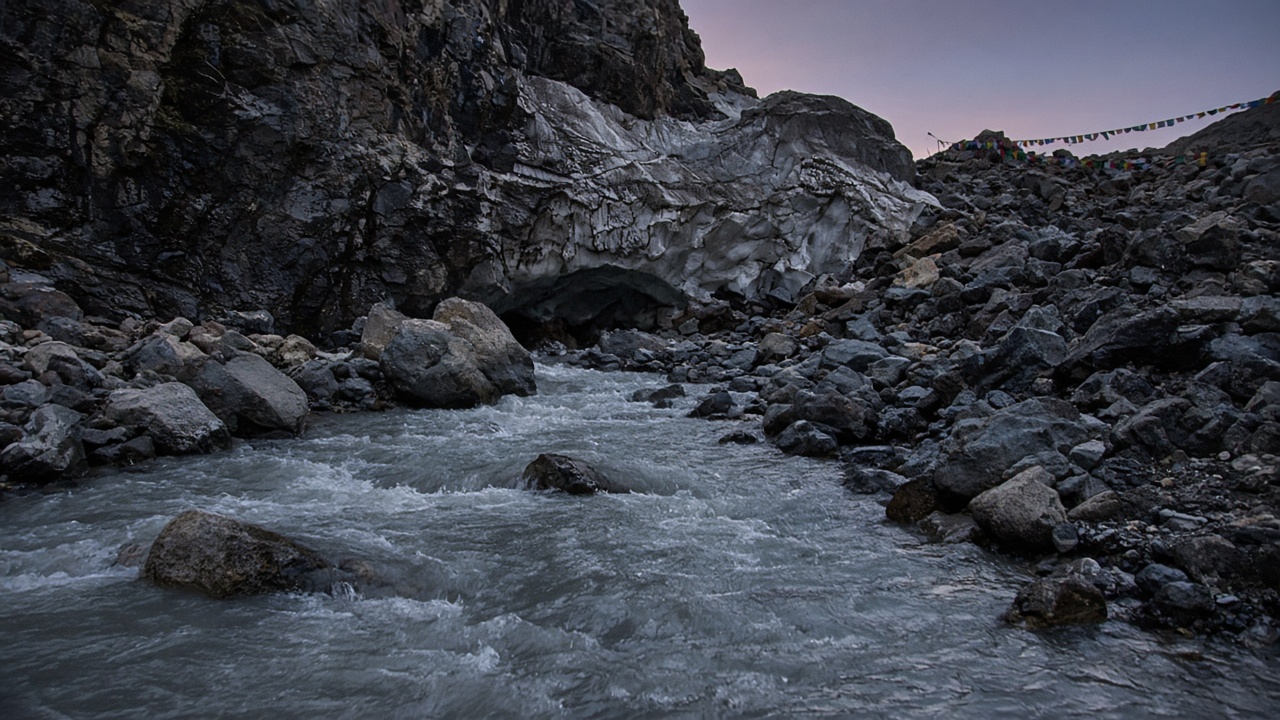 Meeting
Printed pages 1–53 and the bhumika. Gomukh, the train, Haridwar.
Meeting
Printed pages 1–53 and the bhumika. Gomukh, the train, Haridwar.
-
 The path of questions
Printed pages 54–107.
The path of questions
Printed pages 54–107.
-
 Seeking
Printed pages 108–161.
Seeking
Printed pages 108–161.
-
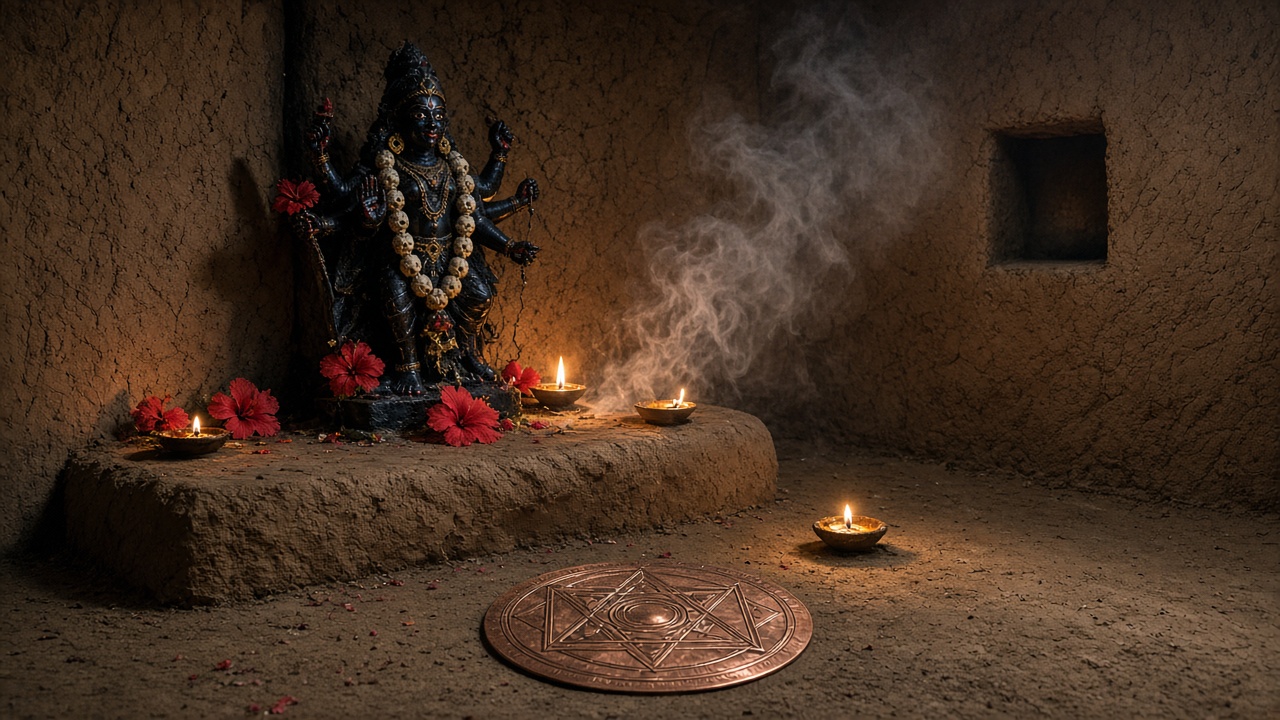 Insight
Printed pages 162–214.
Insight
Printed pages 162–214.
Pictures in this strip were made for this website. They are not plates from the printed book, and they are not photographs of Shree Meenananda Ashram. The cover above is the original printed cover.